Table of Contents
Chromatic Physiology
The following is a list and a description of the chromatic’s special and unusual organs. Other than that which is listed, the chromatic’s body works in the usual patterns set out by nature.
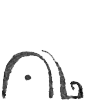
Na; The Third Eye
Physical Description
In the forehead of all chromatic, there is a third eye. The eye is the same in size as the other two, but the eyelids draw further back upon opening, making it appear larger. Unlike the chromatic’s other eyes, the pupil is round and the iris of the eye is ice blue or silver. In lower chromatic, high blood-flow makes for a pinkish tint in the whites of the eye. In higher chromatic, the whites can range from pinkish to deep red. On either side of the upper eyelid, there is a fold of skin with a tiny hole beneath it, which has the appearance of a bird’s ear. The eye is usually kept shut when not in use.
Function
The third eye has multiple purposes. What the eye sees is an alternate spectrum that is not reliant on light, but on three- for lack of a better way to say it -essences of being. The eye sees life as green light, spirit as blue light, and magic as red light. For example, a sentient being, which is alive, has a spirit, and is ‘magical’, would appear entirely white through this vision, whereas a magical weapon, possessing neither life nor spirit, would only appear to be red.
Other than this special sight, the third eye is how chromatic both use and consume the three essences of being. For casting magic, the chromatic must focus the eye on their desired target for the duration of the spell. See information on No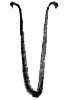 , the chromatic’s tentacle organs, to better understand the spell casting process.
The eye is also used for consumption. When a chromatic chooses to feed on something using Na, the eye must be focused on the desired source of ‘food’. The eye then takes the desired essence from the food, and it gets transferred and stored into the chromatic. As a side note, chromatic may also consume food using their mouth for a similar effect. This method is less efficient, and only plants & animals can be eaten; also, conventionally eating is a less renewable process. With Na, a chromatic could consume the magic out of a staff that would otherwise be inedible (made of stone, etc…).
The purpose of the folds of skin on ether side of the eye is not known. They may be some form of psychic ear.
The following chart pertains to the Na, and how the chromatic (high and low alike) describe what they are seeing within it.

Refer to Chromatic Languages for full meanings of letters. Ordering of letters depends on color dominance. Something of an orange Na color has more pure Sa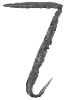 (red/magic) than Ro
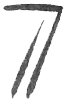 (green/life). This means that the word for orange would be Nakisakoro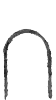
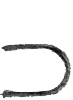 , which literally means “Third eye sight; pure magic with dim life”. It is implied that there is none of a color if it is not mentioned. Another good example is pale yellow. Because yellow is made up of pure Sa and Ro, but it is pale because of added Va
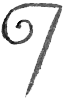 (blue/spirit), the word would be Nakisarokova, which literally means “Third eye sight; pure magic and life with dim spirit”. Very dark colors are described by adding another Ko (less). Nakokoro would mean “Third eye sight; dim dim life”; very dark green
No; The Cranial Tentacle Organs
Physical Description
A chromatic’s tentacle or digit-like No are arranged on it’s head in a way similar to a lions mane. On average, an adult chromatic’s No is about seven inches from the base to the tip, and about one inch in diameter. They are fleshy and pink in color, and have a slightly shiny appearance due to natural oils. At rest, they are very loose and hang down like heavy dreadlocks. Because of their arrangement on the head, they cannot part down the middle. When in use, they ‘blush’ due to blood flow and move according to where they are directed. Female chromatic often have more No than male chromatic, but it does not affect their capabilities.
Function
The No are mainly used to focus magic, in a way ‘borrow’ from a nearby source. By pointing No towards something that has magic, the chromatic is able to tap into that source, and pull the magic essence from it. However, unlike consumption with Na, the magic essence cannot be stored, but must be used directly as it is being focused with the No.
Here is a hypothetical situation in which a chromatic may use No: A chromatic wishes to cast a spell on his friend, and is standing nearby a magic plant. First, the chromatic must focus his third eye on his friend. Then, he may ‘point’ his No towards the magic plant and draw the magical essence from it. Then, as he takes the essence, the chromatic can re-direct it towards his friend in the form of the desired spell.
In this way, chromatic can cast spells at no personal loss of their magical essence. However, going back to the above situation, if there were no source of magic nearby, the chromatic would have to tap into his own magic essence to cast the spell, leaving him ‘hungry’. In this case, the No would not be used at all.
No can also be used to focus life and spirit. It is a similar process, but is harder to learn, and only the very highest of chromatic are able to utilize it. Focusing life and spirit has few uses, and for life in particular, attempting to focus it with No is considered a morally wrong thing to do (see the culture section for more information).
The Tail
Physical Description
Chromatic have long, whip-like tails. The length of the tail on an adult chromatic varies between three and seven feet, usually depending on genetics. Unlike the rest of their bodies, the tails are not covered in fur, but have a thick leathery flesh exterior that is either deep brown in color, or pink like the chromatic’s No. The base of the tail, where there is some fur, is usually about three inches in diameter. The tail then tapers out to a very fine, hard tip.
Function
A chromatic’s tail is most often used as a weapon or form of self-defense. Used as a whip, a chromatic’s tail can easily draw blood. An average tail would be able to lift about twenty-five pounds. Chromatic usually have enough control over their tail that they could grip and carry things in it. However, among higher chromatic, the tail is coiled and bound (see the culture section for more information).


